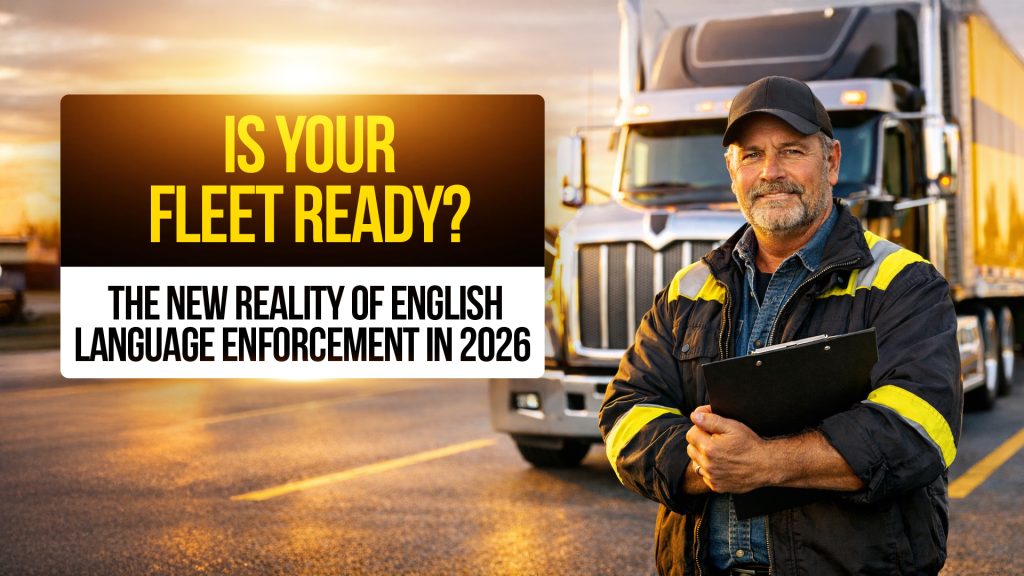
The New Standard: From “Citation” to “Out-of-Service”
Historically, if a driver struggled with English during an inspection, they might receive a violation code, but they were usually allowed to continue their route. Following Executive Order 14286, the FMCSA rescinded previous lenient guidance.
Today, if a driver cannot meet the English proficiency standard, they are placed Out-of-Service (OOS). This means:
- The truck stops immediately: The driver cannot operate the vehicle until a proficient driver takes over.
- CSA Score Impact: An ELP (English Language Proficiency) violation typically carries a 4-point weight in the Driver Fitness BASIC. When coupled with an OOS order (which adds 2 extra points), a single stop can result in a 6-point hit to your safety record.
How the Roadside English Assessment Works
Inspectors are now trained to initiate all contacts in English. If they suspect a driver lacks sufficient proficiency, they follow a mandatory two-step assessment.
Important Note: During this test, drivers are not permitted to use translation apps, “I-Speak” cards, or phone-a-friend interpreters.
Step 1: The Conversational Interview
The inspector will ask routine questions related to the job. The driver must respond sufficiently in English. Common questions include:
- “Where did your trip begin and where is it ending?”
- “Can I see your license and medical examiner’s certificate?”
- “What type of cargo are you hauling today?”
- “How many hours have you been on duty?”
Step 2: Road Sign Recognition
The driver must be able to read and explain the meaning of standard U.S. highway signs (from the MUTCD). While the explanation of the sign’s meaning can sometimes involve gestures or simple terms, the driver must prove they can read the English text on the sign to navigate safely.
Key Exemptions to Remember
While the rule is strict, there are two primary categories of drivers who are handled differently:
- Hearing-Impaired Drivers: Drivers with a valid FMCSA hearing exemption are not required to communicate orally in English, provided they can read and write English sufficiently to fulfill their duties.
- Border Commercial Zones: Drivers operating strictly within designated U.S.-Mexico border commercial zones may be cited for ELP violations but are generally not placed out-of-service, unless they travel beyond those zones.
Best Practices for Carriers in 2026
To avoid the logistical nightmare of a driver being sidelined mid-trip, motor carriers should adopt a proactive stance:
- Screen at Onboarding: Don’t wait for a roadside inspection to find out if a driver is compliant. Use standardized assessments or conduct “mock inspections” during the hiring process.
- Audit Existing Drivers: Periodically check that your current roster can handle the basic conversational requirements of a DOT stop.
- Invest in Training: Many community colleges and private vendors now offer “English for Trucking” courses. Investing in a driver’s language skills is often cheaper than a single OOS violation.
- Document Everything: Keep records of your language assessments in the Driver Qualification (DQ) file to show “due diligence” in the event of an audit.
How to Pass a DOT Stop Conversational English Assessment (2026)
Use this checklist to train drivers pre-hire or during orientation. Add proof of language readiness to each driver’s DQ file.
Conclusion
The 2026 enforcement landscape is unforgiving for carriers who ignore the English language requirement. By ensuring your drivers can communicate clearly with officials and read critical safety signage, you aren’t just following the law, you’re protecting your fleet’s reputation and bottom line.
For more updates and insights into the trucking world, stay tuned to Drivers1st.com!
Download our App