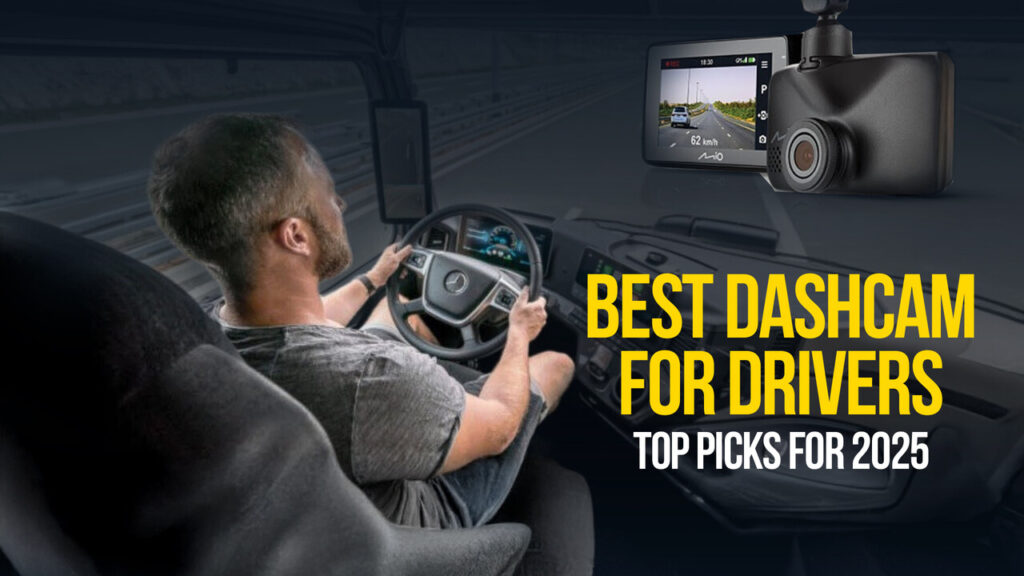
Need the short answer? The BlackVue DR970X-2CH is the best overall dash cam for truckers in 2026, with 4K front video and a 155-degree view. The Vantrue N4 Pro wins for three-angle coverage. The Garmin Dash Cam 67W is the best pick for owner-operators at a one-time price near $250. The Vantrue E1 Lite is the budget pick at about $115. Full breakdown below.
A dash cam is your silent witness. When a four-wheeler cuts you off and brakes, the footage proves your side in minutes instead of months. Video evidence resolves the majority of disputed truck incident claims, protects your CSA score, and can lower your insurance premium.
Why Every CDL Driver Needs One in 2026
- Proof in accidents. False claims against trucks are common because the trucking company has deeper pockets. Footage ends the argument.
- Insurance savings. Many insurers discount premiums for camera-equipped rigs, and clean footage speeds up claims.
- CSA score protection. Company drivers keep their record clean when video shows the other vehicle at fault.
- Overnight security. Parking mode records impacts, break-in attempts, and hit-and-runs while you sleep.
Many carriers now require cameras as part of fleet safety programs. Owning your own means you control your own footage.
The Best Dash Cams for Truckers in 2026
Best Overall: BlackVue DR970X-2CH
Crisp 4K front video, a 155-degree field of view, and dependable dual-channel recording built for long hours. License plates stay readable day and night, which is the whole point of the purchase. Storage runs up to 256GB with the right card.
Best for: Drivers who want the clearest possible evidence.
Watch for: Premium price, and no fleet-software integration.
Best Multi-Angle Coverage: Vantrue N4 Pro
Three channels in one unit: 4K front, 1080p cabin, 1080p rear, with infrared night vision inside the cab. Big rigs have big blind spots, and three angles close most of them.
Best for: Owner-operators who want full coverage, including backing and dock maneuvers.
Best for Owner-Operators: Garmin Dash Cam 67W
1440p video, a 180-degree lens that catches lane-change disputes, built-in GPS stamping, and voice control so you can save a clip without touching the screen. One-time price around $250, no subscription.
Best for: Drivers who want reliable, subscription-free protection from a brand they already trust on the dash.
Best Heavy-Duty Multi-Channel: VIOFO A329WW
4K front plus dual waterproof 2K rear cameras built for trucks and trailers, running Sony STARVIS 2 sensors for low-light clarity. Drivers on TruckersReport consistently recommend VIOFO for rigs that need trailer-end coverage.
Best for: Owner-operators covering the full length of the rig, including the trailer.
Best Budget Pick: Vantrue E1 Lite
About $115, and it still runs a Sony STARVIS low-light sensor. Most truck driving happens in the dark, so sensor quality beats raw resolution at this price point.
Best for: New drivers and anyone who wants basic evidence without a big spend.
Best for Fleets: Motive or Samsara AI Dash Cams
Fleet platforms add AI event detection, live cloud upload, and driver coaching on top of recording. Footage uploads the moment something happens, so safety teams review it before the truck reaches the next stop. Both run on subscriptions, so they fit fleets better than solo drivers.
Best for: Carriers and fleet managers running 5+ trucks.
Quick Comparison
| Camera | Video | Channels | Standout | Best For |
|---|---|---|---|---|
| BlackVue DR970X-2CH | 4K | 2 | Sharpest footage | Best overall |
| Vantrue N4 Pro | 4K front | 3 | Cabin + rear coverage | Full coverage |
| Garmin 67W | 1440p | 1 | Voice control, no fees | Owner-operators |
| VIOFO A329WW | 4K front | 3 | Waterproof trailer cams | Heavy-duty rigs |
| Vantrue E1 Lite | 1080p+ | 1 | Night sensor at $115 | Budget |
| Motive / Samsara | Varies | 2+ | AI alerts, cloud upload | Fleets |
What to Look For (Trucker Edition)
Night vision sensor quality. Prioritize Sony STARVIS sensors over raw megapixels. Most of your miles happen in low light.
Heat and vibration tolerance. Semi cabs run hot and shake hard. Choose supercapacitor-powered cameras over battery-powered ones. Batteries swell and fail in summer cabs.
High-endurance storage. Standard microSD cards die in 3 to 6 months of loop recording. Use a high-endurance card and replace it every 12 to 18 months.
Mounting. Adhesive mounts beat suction cups in a vibrating cab. Mount behind the mirror, centered, out of your sight line, and check your state’s windshield obstruction rules.
Hardwiring. A $15 to $25 hardwire kit to a switched circuit powers the camera cleanly and enables parking mode. The cigarette lighter works, until vibration shakes it loose.
Parking mode. Impact detection while parked has saved more than one driver from an unexplained dent and a denied claim.
👉 Looking for more driver tools to make your route safer? Explore our blog for expert tips and trucking tech reviews.
How Dash Cams Support Drivers and Carriers
At Drivers 1st, we’re committed to putting drivers first — that means advocating for tools that protect your livelihood and keep the road safer for everyone. Dash cams help build transparency between carriers and drivers by:
- Reducing false claims
- Encouraging safe driving habits
- Building trust with verifiable incident reports
They’re not just a defense tool; they’re a communication bridge that supports long-term success.
FAQs About GPS for Truckers
Are dash cams legal in all states?
Yes. Placement rules differ, so keep the camera out of your direct view and check your state’s windshield laws.
Do trucking companies provide dash cams?
Some install them, and some reimburse part of the cost. Ask about camera policy before you sign on with a carrier. Dual-facing company cameras also raise privacy questions worth asking about up front.
Can dash cam footage be used in court?
Yes. Clear, time-stamped footage is strong evidence in accident claims and disputes. Back up important clips off the card right away, because loop recording overwrites old files.
What resolution do I actually need?
Enough to read a license plate: 1440p or better up front. Rear and cabin channels can run 1080p.
Should I get a dual-facing camera?
Driver-facing lenses help defend against fatigue and distraction claims, and some insurers reward them. Solo owner-operators can skip the inward lens if privacy matters more.
Ready to Drive Smarter?
A dash cam protects your record. The right carrier respects it. Drivers 1st connects CDL A drivers with direct-hire jobs at carriers that invest in driver safety, with no staffing agency taking a cut.
✅ Browse direct-hire CDL jobs →
📞 Talk to a Driver Advocate
Download our App